

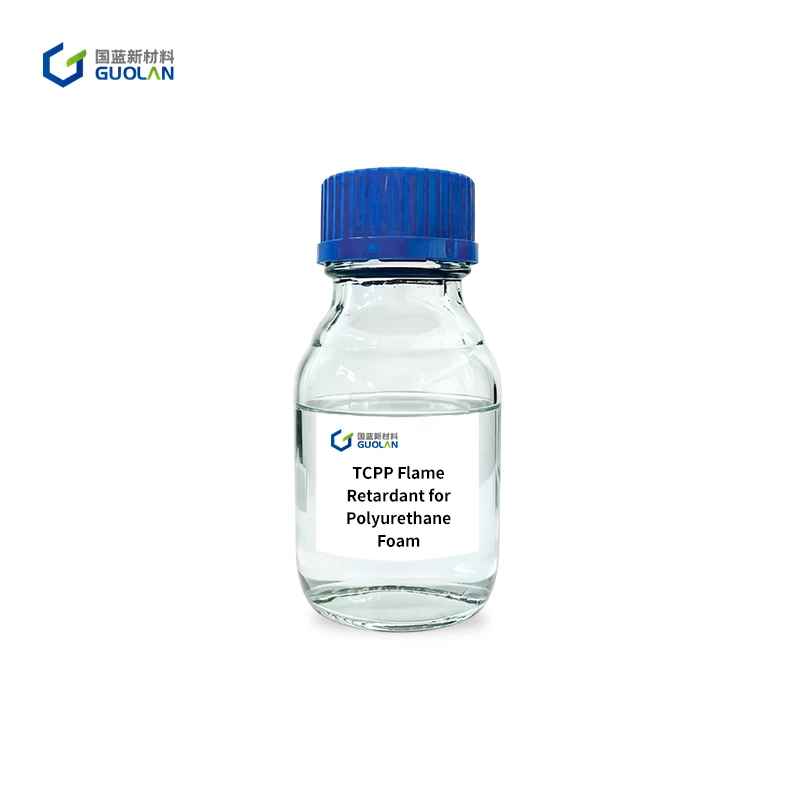
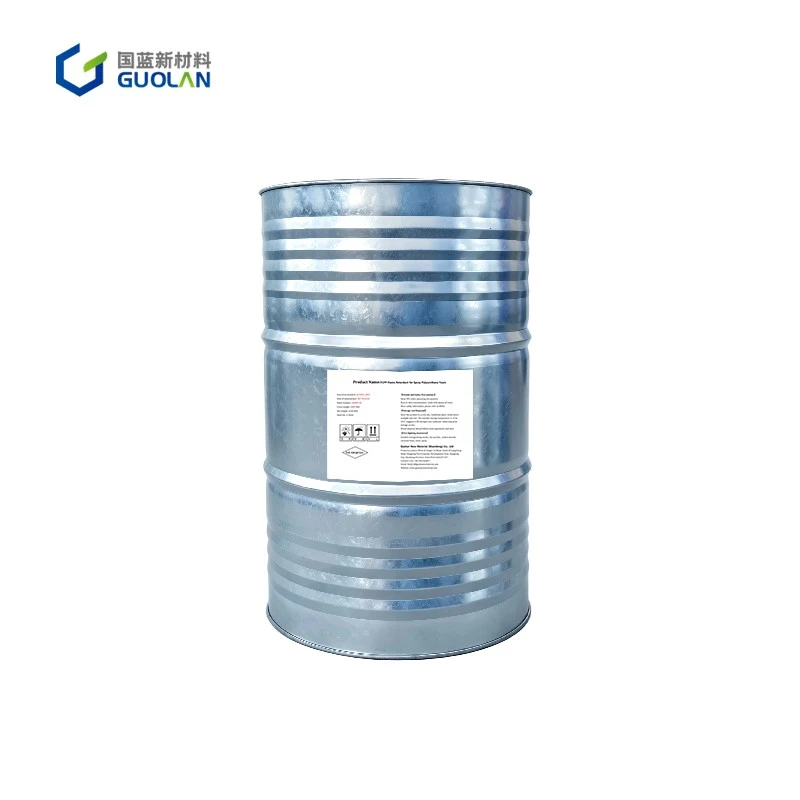
Guolan New Materials (Shandong) Co., Ltd. is one of the leading manufacturers and suppliers of tcpp flame retardant for polyurethane foam in China. With a professional production team, we are able to meet the needs of the majority of our customers. Welcome to wholesale bulk top-quality tcpp flame retardant for polyurethane foam from our factory.
Product Overview
TCPP Flame Retardant for Polyurethane Foam is a specialized formulation optimized for use in both flexible and rigid polyurethane foam manufacturing. Engineered with excellent thermal conductivity and superior hydrolysis stability, this grade is particularly suited for ASTM E84 (Grade 1) compliant foams used in building insulation, furniture padding, and automotive seating. Its low viscosity at processing temperatures ensures seamless integration into polyol systems without disrupting foam rheology or cell structure development.
The unique molecular architecture of TCPP provides effective flame suppression through both gas-phase and condensed-phase mechanisms. During combustion, TCPP decomposes to release phosphorus-containing radicals that quench flame-propagating free radicals in the gas phase, while simultaneously promoting char formation on the foam surface that acts as a thermal barrier. This dual-action mechanism delivers superior flame retardancy at lower addition levels compared to conventional alternatives.
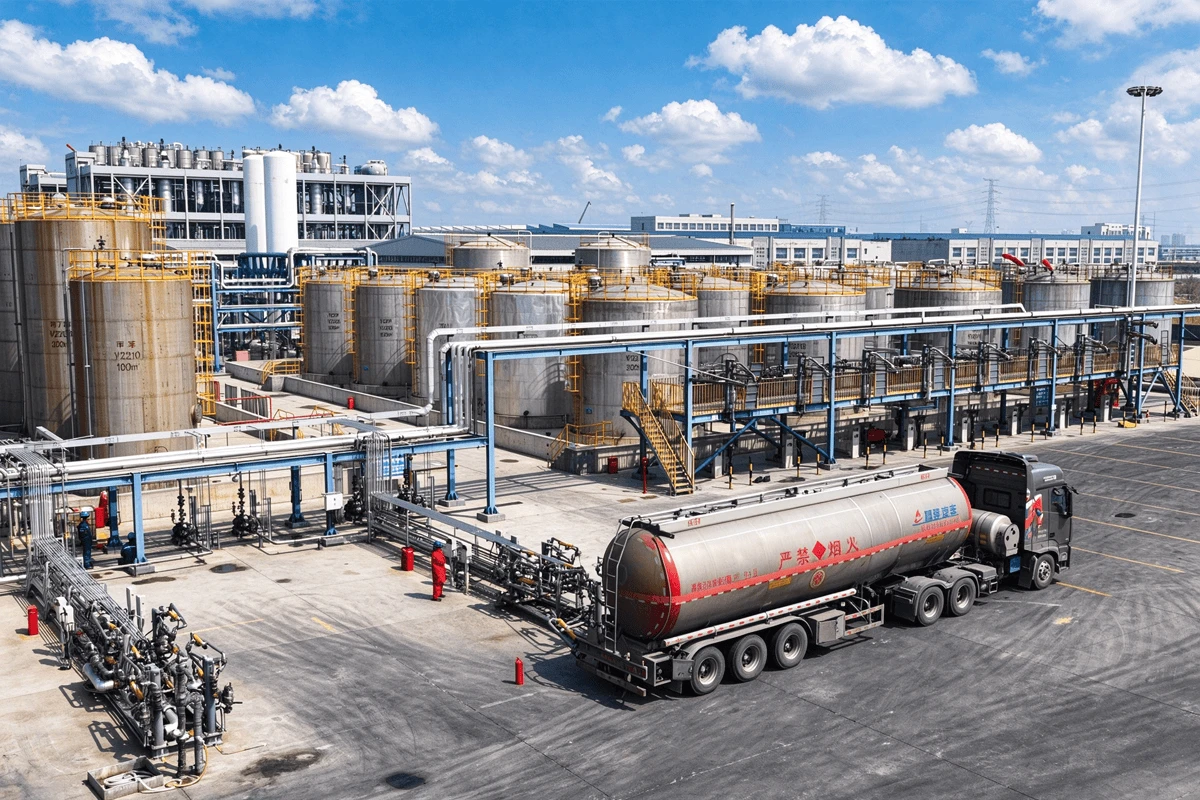
Guolan New Materials produces this specialized TCPP grade using proprietary continuous synthesis technology with stringent quality controls. Our 30,000 MT/year production capacity ensures reliable supply for foam manufacturers worldwide. Each batch is accompanied by a Certificate of Analysis (COA) and full technical support from our experienced formulation team.
Technical Parameters
|
Parameter |
Specification |
|
Acid Value, mgKOH/g |
≤0.1 |
|
Moisture, w% |
≤0.1 |
|
Viscosity (25°C), mPa·s |
67-72 |
|
Chromaticity, APHA |
≤50 |
|
Density (20-25°C), g/cm³ |
1.288-1.297 |
|
Flash Point, °C |
≥200 |
|
ASTM E84 Rating |
Grade 1 (when formulated correctly) |
Feature Highlights
- Optimized for PU Foam Systems: Specifically formulated for seamless integration into polyurethane foam production lines, compatible with all major polyol types including polyester, polyether, and blended systems.
- Excellent Hydrolysis Stability: Superior resistance to hydrolytic degradation ensures long-term flame retardant performance stability, even in high-humidity environments or for products with extended service lives.
- Low Viscosity Processing: Low viscosity at room temperature facilitates easy mixing with polyols and other additives, reducing energy consumption and improving production efficiency in both continuous and batch foaming processes.
- ASTM E84 Grade 1 Compliance: When used at recommended dosages, enables foam products to achieve ASTM E84 Grade 1 surface burning characteristics, meeting stringent building code requirements for interior insulation and lining materials.
- Minimal Impact on Foam Properties: Does not significantly adversely affect foam density, cell structure, resilience, or compression set when used within recommended dosage ranges, preserving the functional properties of the end product.
- Cost-Effective Fire Protection: Provides reliable flame retardancy at addition levels of 8-15% relative to polyol weight, offering an economical solution for manufacturers seeking compliance without premium pricing.
Industry Application Scenarios
Flexible PU Foam - Furniture & Bedding
TCPP is the industry-preferred flame retardant for flexible polyurethane foams used in sofa cushions, mattress padding, office chairs, and automotive seating. It maintains the soft hand feel, resilience, and comfort properties that consumers expect while ensuring products meet flammability standards such as CAL 117, BS 5852, and NFPA 260.
Rigid PU Foam - Building Insulation
In rigid polyurethane foam for building insulation panels, spray-on insulation, and pipe insulation, TCPP provides effective flame protection while maintaining the excellent thermal insulation properties (low k-value) that make PU foam the insulation material of choice. Its compatibility with blowing agents ensures minimal impact on foam density and thermal performance.
Automotive Foam Components
TCPP is widely specified for automotive interior foam components including seat cushions, headrests, armrests, and trunk liners. Its flame retardant performance helps vehicle manufacturers meet rigorous automotive flammability regulations (FMVSS 302, DIN 75200) while maintaining interior aesthetics and comfort.
Acoustic & Specialty Foams
Used in sound-absorbing foam panels, filter foams, and specialty industrial foams where both acoustic performance and flame retardancy are required. TCPP's compatibility with various foam formulations makes it suitable for niche applications requiring specialized property combinations.
FAQ
Q: What is the recommended TCPP dosage for flexible PU foam?
A: Typical addition levels range from 8% to 15% relative to polyol weight, depending on the desired flame retardancy rating and foam formulation. Our technical team can provide specific recommendations.
Q: Does TCPP affect the color of white foams?
A: Our TCPP grades are optimized for low color contribution. In most white or light-colored foam applications, color impact is minimal at recommended usage levels.
Q: Is TCPP compatible with eco-friendly blowing agents?
A: Yes, TCPP shows excellent compatibility with water-blown, CO2-blown, and low-GWP blowing agent systems used in modern foam formulations.
Q: What flammability standards can TCPP-treated foams achieve?
A: TCPP-treated PU foams can achieve ASTM E84 Grade 1, CAL 117, and various other international flammability standards depending on formulation and dosage.
Q: How does TCPP affect foam density and physical properties?
A: At recommended dosage levels, TCPP has minimal impact on foam density, cell structure, or mechanical properties. Formulation adjustments may be needed for optimal results.
Q: Which polyol types can this grade be used with?
A: It is compatible with all major polyol types including polyester, polyether and blended systems, and its low room-temperature viscosity makes mixing straightforward in both continuous and batch foaming lines.
Q: What loading achieves ASTM E84 Grade 1?
A: At recommended dosages of 8-15% relative to polyol weight, foam products can reach ASTM E84 Grade 1 surface burning characteristics, meeting building code requirements for interior insulation and lining materials.
Why Choose Guolan New Materials
- Built For The Foam Line: This grade is formulated for seamless integration into polyurethane foam production, so it drops into existing polyol, catalyst and surfactant systems without re-engineering the formulation.
- Hydrolysis Stability For Long-Life Foam: Resistance to hydrolytic degradation keeps flame retardant performance stable in high-humidity environments and in products designed for extended service life such as building insulation.
- Foam Properties Left Intact: Used within recommended dosage ranges it does not significantly affect foam density, cell structure, resilience or compression set, so the functional properties the end customer buys are preserved.
- Low Viscosity Saves Energy: Low viscosity at room temperature eases mixing with polyols and other additives, cutting energy consumption and improving throughput on both continuous and batch lines.
- Economical Compliance: Reliable flame retardancy at 8-15% loading on polyol weight gives manufacturers a route to code compliance without premium additive pricing.
Hot Tags: tcpp flame retardant for polyurethane foam, China tcpp flame retardant for polyurethane foam manufacturers, suppliers, factory


