


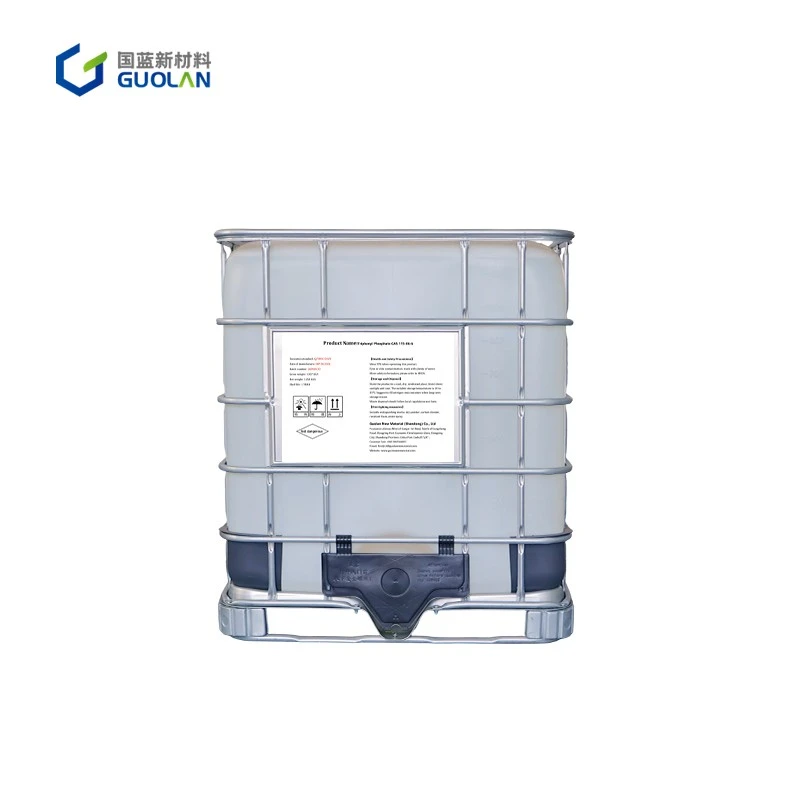
Guolan New Materials (Shandong) Co., Ltd. is one of the leading manufacturers and suppliers of triphenyl phosphate cas 115-86-6 in China. With a professional production team, we are able to meet the needs of the majority of our customers. Welcome to wholesale bulk top-quality triphenyl phosphate cas 115-86-6 from our factory.
Product Overview
Triphenyl Phosphate (TPP) is a halogen-free organic phosphate flame retardant and plasticizer available in crystal or flake form. As a solid phosphate ester, TPP offers unique processing advantages including easy handling, precise dosing, and excellent compatibility with a wide range of polymer systems. It is primarily used as a flame-retardant plasticizer for cellulosic resins, vinyl resins, natural and synthetic rubbers, and engineering plastics including polycarbonate, PPO, and rigid polyurethane foam.
TPP operates through a condensed-phase flame retardant mechanism, promoting char formation on the polymer surface during combustion to create a protective barrier that insulates the underlying material from heat and oxygen. This mechanism provides effective flame retardancy without releasing toxic halogenated fumes, making TPP an attractive option for applications with strict environmental and health regulations. Additionally, TPP functions as an effective plasticizer, improving the flexibility, workability, and impact resistance of treated polymers.
Guolan New Materials produces TPP using high-purity raw materials and controlled synthesis processes to ensure consistent crystal quality, low acid value, and excellent color stability. Our product meets the stringent requirements of global customers in engineering plastics, coatings, adhesives, and specialty chemical applications.
Technical Parameters
|
Parameter |
Specification |
|
Appearance |
White crystals or flakes |
|
Chromaticity (Pt-Co) |
≤40 |
|
Content, w% |
≥99.5 |
|
Crystallization Point, °C |
≥48.5 |
|
Acid Value (KOH), mg/g |
≤0.05 |
|
Free Phenol, % |
≤0.05 |
|
Water-soluble Impurities (Chlorides) |
Not detected |
Feature Highlights
- Halogen-Free Flame Retardancy: As a phosphorus-based additive, TPP provides effective flame retardancy without halogen content, supporting compliance with increasingly stringent environmental regulations worldwide including EU REACH and TSCA requirements.
- Dual Function - Plasticizer & Flame Retardant: Uniquely combines flame retardant and plasticizing functions in a single additive, reducing formulation complexity and overall additive costs for polymer manufacturers.
- Excellent Transparency: When used in compatible polymer systems, TPP maintains optical clarity and transparency, making it suitable for applications where appearance is critical such as packaging films, coatings, and consumer products.
- Low Volatility & High Thermal Stability: High molecular weight and low vapor pressure ensure minimal loss during high-temperature processing, maintaining consistent flame retardant performance throughout product service life.
- Solid Form Advantages: Available as crystals or flakes for easy handling, precise weighing, and dust-free processing. Superior to liquid flame retardants in applications where drip prevention and precise dosing are important.
- Broad Polymer Compatibility: Compatible with cellulosic resins, vinyl resins, polycarbonate, PPO, epoxy resins, phenolic resins, natural and synthetic rubbers, and various coating systems.
Industry Application Scenarios
Engineering Plastics
TPP is widely used as a flame-retardant plasticizer in engineering plastics including polycarbonate (PC), PC/ABS blends, PPO, and various specialty polymers used in electrical connectors, automotive components, and consumer electronics housings. It provides effective flame retardancy while maintaining the mechanical properties, thermal stability, and surface finish required by OEM specifications.
Cellulosic Materials
In cellulose acetate and cellulose nitrate products, TPP serves as both flame retardant and plasticizer, improving fire safety while maintaining flexibility, transparency, and processability. Applications include photographic films, packaging films, cigarette filters, and coatings where both safety and appearance are critical.
Rubber & Elastomers
TPP is used as a flame-retardant plasticizer in natural and synthetic rubbers including SBR, NBR, and neoprene. It improves flexibility, low-temperature performance, and aging resistance while providing flame suppression in rubber products such as hoses, belts, seals, and protective clothing materials.
Coatings & Adhesives
In industrial coatings, wood finishes, and adhesives, TPP provides flame retardant protection while improving film formation, flexibility, and adhesion. It is compatible with nitrocellulose, acrylic, epoxy, and polyurethane coating systems used in architectural, automotive, and industrial maintenance applications.
FAQ
Q: What is the melting/crystallization point of TPP?
A: TPP has a crystallization point of ≥48.5°C. It is supplied as white crystals or flakes for easy handling and dosing.
Q: How does TPP compare to liquid flame retardants in terms of handling?
A: TPP's solid form offers advantages in precise dosing, dust-free processing, and no spillage risks compared to liquid flame retardants.
Q: Is TPP suitable for transparent polymer applications?
A: Yes, TPP maintains good optical clarity in compatible polymer systems, making it suitable for transparent or light-colored applications.
Q: What is the shelf life of crystalline TPP?
A: When stored properly in sealed packaging away from moisture and direct sunlight, TPP has a shelf life of 24 months from date of manufacture.
Q: Can TPP be used in reactive polymer systems?
A: Yes, TPP can function as both an additive and reactive flame retardant in certain polymer systems, providing flexibility in formulation design.
Q: What physical form does TPP ship in, and how does that help dosing?
A: TPP is supplied as white crystals or flakes. The solid form allows precise weighing, dust-light handling and drip-free dosing, which is an advantage over liquid retardants where metering accuracy and spillage are recurring problems.
Q: How is free phenol controlled in this grade?
A: Free phenol is limited to 0.05% maximum and water-soluble chlorides are reported as not detected, with content at 99.5% minimum and acid value at 0.05 mg/g maximum. These are the impurity limits that matter most for electrical and optical applications.
Why Choose Guolan New Materials
- Solid Form, Precise Dosing: Crystals and flakes weigh accurately and dose without dripping, giving compounders better batch-to-batch repeatability than liquid retardants and cleaner handling on the line.
- Halogen-Free With Regulatory Cover: Phosphorus-based and halogen-free, TPP supports compliance with tightening environmental regulations including EU REACH-driven specifications for electrical and electronic products.
- Clarity Retained: In compatible polymer systems it maintains optical clarity, which is why it is chosen for packaging film, coatings and consumer products where appearance cannot be compromised.
- Stable Through High-Temperature Processing: High molecular weight and low vapour pressure keep losses minimal during hot processing, so flame retardant performance is consistent across the service life of the part.
- Impurity Limits Suited To Electrical Use: Free phenol capped at 0.05%, chlorides not detected, crystallization point at 48.5C minimum and chromaticity at 40 Pt-Co maximum - a specification built for connectors, housings and laminates.
Hot Tags: triphenyl phosphate cas 115-86-6, China triphenyl phosphate cas 115-86-6 manufacturers, suppliers, factory


