

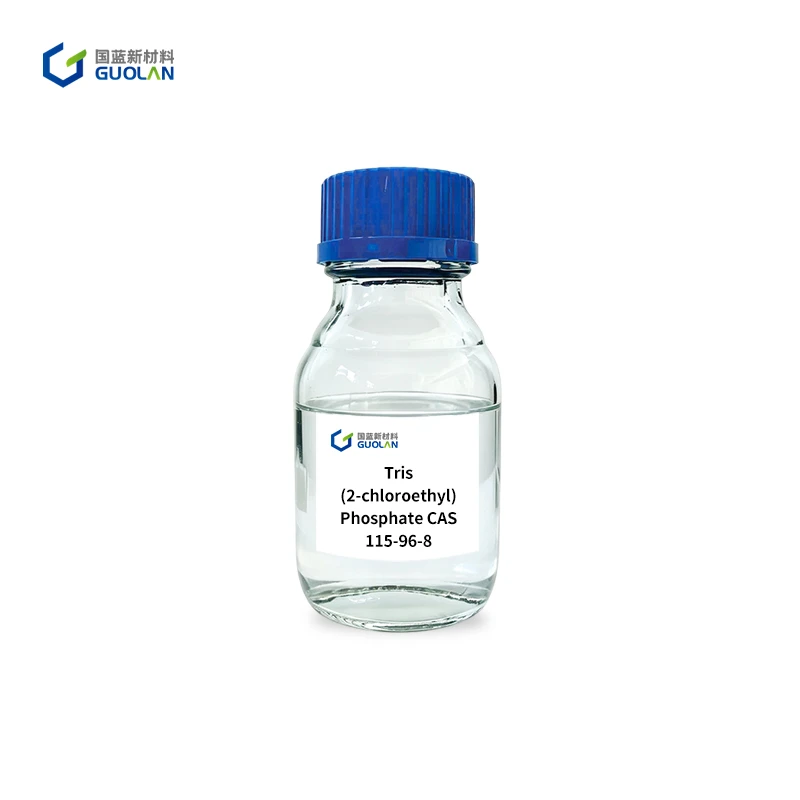
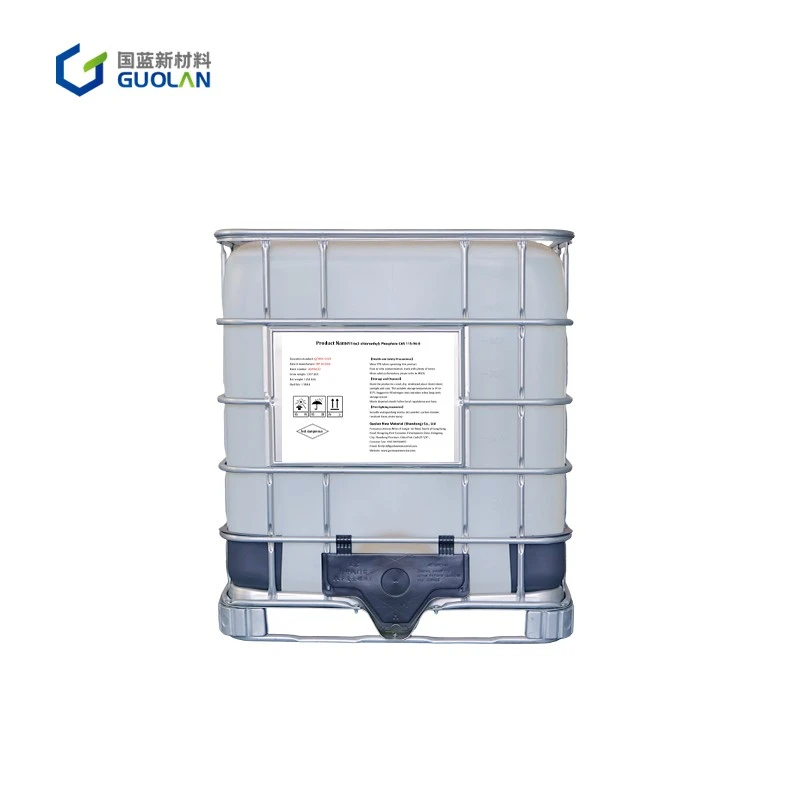
Guolan New Materials (Shandong) Co., Ltd. is one of the leading manufacturers and suppliers of tris(2-chloroethyl) phosphate cas 115-96-8 in China. With a professional production team, we are able to meet the needs of the majority of our customers. Welcome to wholesale bulk top-quality tris(2-chloroethyl) phosphate cas 115-96-8 from our factory.
Product Overview
TCEP (Tris(2-chloroethyl) Phosphate) is an additive-type halogenated flame retardant and plasticizer widely used in a variety of synthetic materials including cellulose acetate, polyvinyl chloride, polyurethane, phenolic resins, and polyvinyl acetate. With excellent flame retardant efficiency combined with good plasticizing effects, TCEP provides dual functionality that simplifies formulation and reduces overall additive costs for manufacturers.
TCEP exhibits outstanding compatibility with a broad range of polymer systems, providing effective flame retardancy through both gas-phase radical quenching and condensed-phase char formation mechanisms. Its low molecular weight enables easy incorporation into polymer matrices during processing, while its chemical structure provides good resistance to migration, extraction, and volatilization during the product service life.
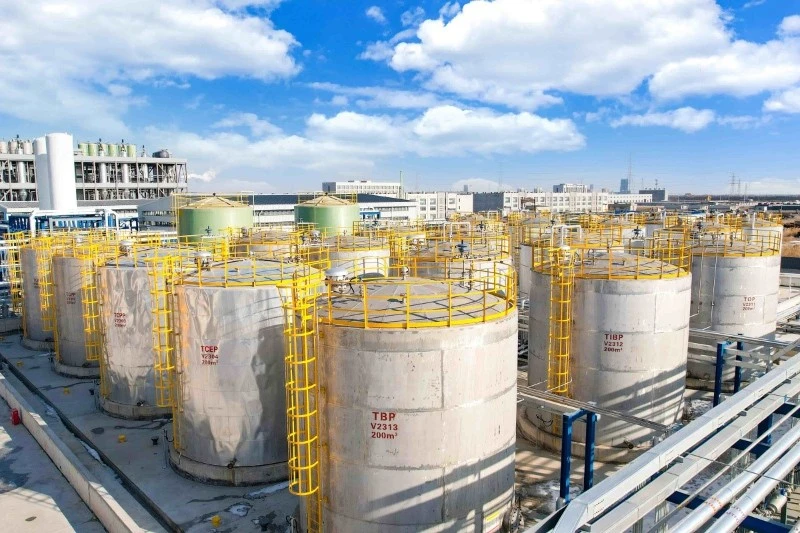
Guolan New Materials produces TCEP using advanced synthesis technology with strict quality controls. Our production facility ensures consistent product quality meeting international standards, supported by comprehensive technical documentation including COA, MSDS, and regulatory compliance information for global market access.
Technical Parameters
|
Parameter |
Specification |
|
Acid Value, mgKOH/g |
≤0.1 |
|
Moisture, w% |
≤0.1 |
|
Refractive Index (nD20) |
1.470-1.479 |
|
Viscosity (25°C), mPa·s |
38-40 |
|
Flash Point, °C |
≥220 |
|
Chromaticity, APHA |
≤50 |
|
Density (20-25°C), g/cm³ |
1.411-1.430 |
Feature Highlights
- Dual Functionality: Combines flame retardant and plasticizing properties in a single additive, reducing formulation complexity and overall additive costs for polymer manufacturers.
- Excellent Flame Retardancy: Provides effective flame suppression in cellulose acetate, PVC, polyurethane, phenolic resins, and other synthetic materials at typical addition levels of 5-10 phr.
- Good Plasticizing Effect: Improves flexibility, workability, and physical properties of treated materials while delivering flame retardant performance, eliminating the need for separate plasticizer additives in many applications.
- Enhanced Property Profile: Improves water resistance, weatherability, cold tolerance, and antistatic properties of treated materials, extending product service life and broadening application possibilities.
- Versatile Material Compatibility: Compatible with cellulose acetate, nitrocellulose, ethylcellulose, PVC, polyvinyl acetate, polyurethane, phenolic resins, and various coating systems.
- Self-Extinguishing Performance: Treated products exhibit self-extinguishing characteristics, automatically suppressing flame spread without requiring external intervention, enhancing safety in end-use applications.

Industry Application Scenarios
Cellulose Esters & Derivatives
TCEP is widely used as a flame retardant plasticizer in cellulose acetate, nitrocellulose, and ethylcellulose products including films, coatings, adhesives, and molded items. It provides effective flame retardancy while maintaining the transparency, gloss, and mechanical properties essential for these high-value materials.
PVC & Vinyl Products
In PVC compounding, TCEP serves as both flame retardant and plasticizer for rigid and flexible PVC products including cable insulation, flooring, wall coverings, and synthetic leather. Its compatibility with PVC resins ensures uniform dispersion and stable performance throughout the product lifecycle.
Polyurethane & Rubber
TCEP is used as a flame retardant in polyurethane foams, elastomers, and adhesives. It provides effective fire protection while maintaining the mechanical properties and processing characteristics required by end-use applications. Also used in flame-retardant rubber conveyor belts where fire safety is critical.
Coatings & Adhesives
In industrial coatings, wood finishes, and pressure-sensitive adhesives, TCEP provides flame retardant protection while improving film formation, flexibility, and adhesion properties. Compatible with nitrocellulose, acrylic, and alkyd coating systems widely used in architectural and industrial maintenance applications.
FAQ
Q: What is the recommended dosage of TCEP for PVC applications?
A: Typical addition levels range from 5% to 10% (5-10 phr) depending on the specific PVC formulation and required flame retardancy performance.
Q: Is TCEP suitable for use in rubber conveyor belts?
A: Yes, TCEP is widely used as the primary flame retardant material for flame-retardant rubber conveyor belts, with general addition amounts of 5%-10%.
Q: What storage conditions are recommended for TCEP?
A: Store in a cool, well-ventilated warehouse away from strong oxidizers, acids, and alkalis. Keep containers tightly closed.
Q: Does TCEP improve the physical properties of treated materials?
A: Yes, TCEP provides good plasticizing effects that can improve flexibility, water resistance, weatherability, cold tolerance, and antistatic properties of treated materials.
Q: What packaging options do you offer for TCEP?
A: We typically package TCEP in 250kg galvanized iron drums. Custom packaging arrangements are available for regular customers.
Q: What loading does TCEP typically require?
A: Typical addition levels are 5-10 phr across cellulose acetate, PVC, polyurethane and phenolic systems, with the exact figure set by the flammability target and the base polymer.
Q: Besides flame retardancy, what else does TCEP contribute?
A: It improves water resistance, weatherability, cold tolerance and antistatic behaviour of treated materials, and treated products exhibit self-extinguishing characteristics that suppress flame spread without external intervention.
Why Choose Guolan New Materials
- Flame Retardant And Plasticizer Combined: One additive delivers fire performance and flexibility together, removing a separate plasticizer from many formulations and reducing total additive cost and complexity.
- Self-Extinguishing Behaviour: Treated products suppress flame spread on their own, which is a meaningful safety margin in end-use applications where no intervention can be assumed.
- Property Profile Broadened, Not Just Fire Rating: Water resistance, weatherability, cold tolerance and antistatic properties all improve, extending service life and opening applications that a fire-only additive would not support.
- Low Viscosity For Easy Dosing: At 38-40 mPa.s and 25C the grade meters and mixes readily, with a flash point above 220C giving comfortable processing headroom.
- Wide Resin Compatibility: Works across cellulose acetate, nitrocellulose, ethylcellulose, PVC, polyvinyl acetate, polyurethane, phenolic resins and coating systems, so one qualified material can serve several product lines.
Hot Tags: tris(2-chloroethyl) phosphate cas 115-96-8, China tris(2-chloroethyl) phosphate cas 115-96-8 manufacturers, suppliers, factory


