

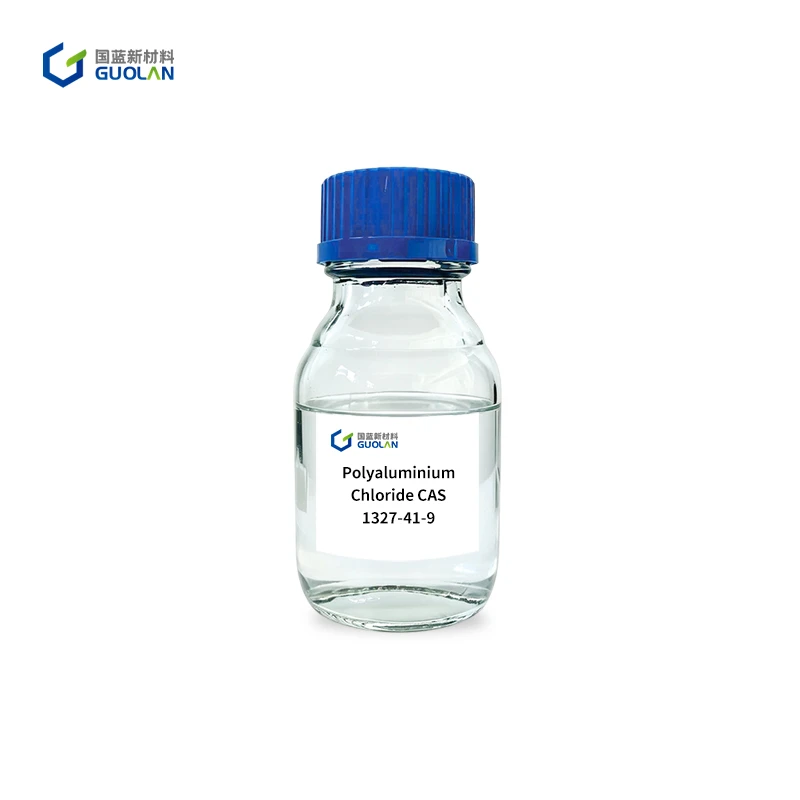
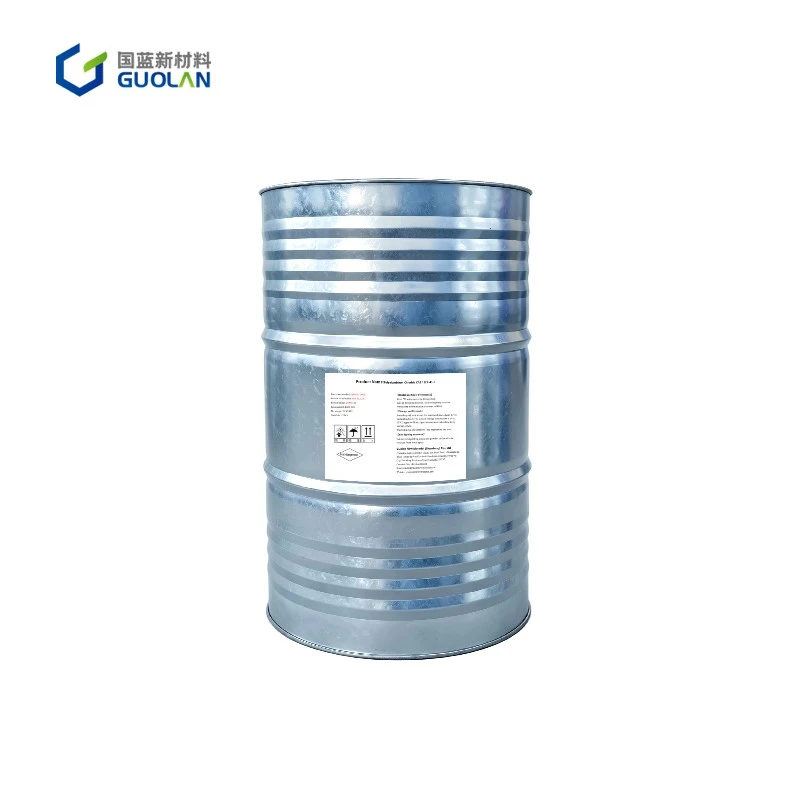
Guolan New Materials (Shandong) Co., Ltd. is one of the leading manufacturers and suppliers of polyaluminium chloride cas 1327-41-9 in China. With a professional production team, we are able to meet the needs of the majority of our customers. Welcome to wholesale bulk top-quality polyaluminium chloride cas 1327-41-9 from our factory.
Products Description
Liquid polyaluminium chloride (PAC), formula [Al₂(OH)ₙCl₆₋ₙ]ₘ, is a yellow to yellowish-brown transparent liquid. As an inorganic polymer flocculant, PAC hydrolyzes into polynuclear hydroxyl complexes with strong charge neutralization and bridging adsorption capacity, forming fast-settling flocs. This product delivers Al₂O₃ content ≥8.0%, density ≥1.12 g/cm³, and basicity of 20.0–98.0%, making it a widely used high-efficiency flocculant in water treatment.
Guolan New Materials produces liquid PAC using advanced calcium aluminate acid-dissolution polymerization technology. As a liquid product, it can be directly diluted and dosed without a solid dissolution step, making it ideal for continuous automatic dosing systems in water treatment plants. Compared to traditional solid flocculants, liquid PAC eliminates dissolution equipment, dust collection, and manual operation, particularly suitable for municipal water plants and industrial wastewater systems requiring continuous automated dosing. Strictly manufactured to enterprise standard Q/GL 011-2024, with tightly controlled heavy metal limits (arsenic, lead, cadmium, mercury, chromium).
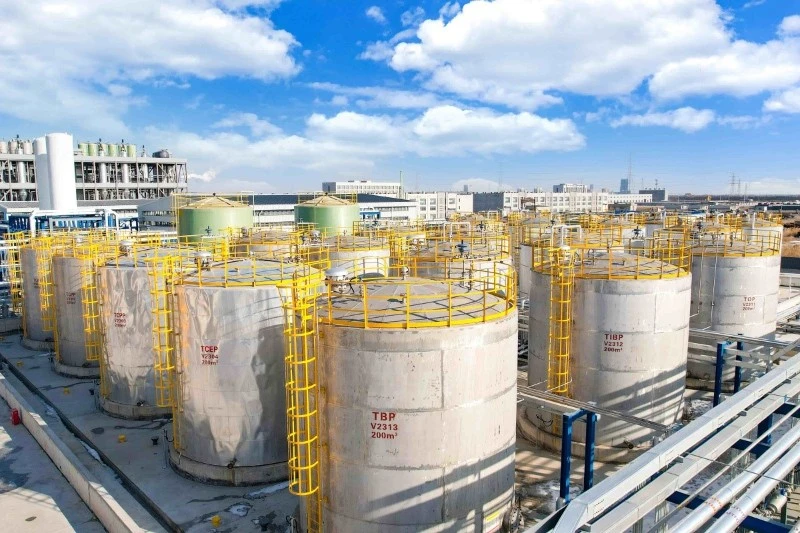
Guolan New Materials operates a specialized water treatment chemical production base in the Dongying Port Economic Development Zone, Shandong Province, with an annual capacity of 25,000 tons. Backed by ISO 9001:2015 certified quality management, every batch is accompanied by a Certificate of Analysis (COA). Our products are exported from Qingdao, Shanghai, and Tianjin ports, with domestic delivery available by bulk tank truck. We serve customers across Asia, North America, the Middle East, and Southeast Asia, offering OEM private labeling and various Al₂O₃ content specifications.
Technical Specifications
|
Parameter |
Specification |
|
CAS Number |
1327-41-9 |
|
EINECS |
215-477-2 |
|
HS Code |
282732 |
|
Chemical Formula |
[Al₂(OH)ₙCl₆₋ₙ]ₘ |
|
Appearance |
Yellow to yellowish-brown liquid |
|
Al₂O₃ Mass Fraction, wt% |
≥8.0 |
|
Density (20°C), g/cm³ |
≥1.12 |
|
Basicity, % |
20.0–98.0 |
|
Water-Insoluble Matter, wt% |
≤0.4 |
|
pH (10 g/L aqueous solution) |
3.5–5.0 |
|
Iron (Fe), wt% |
≤1.5 |
|
Arsenic (As), wt% |
≤0.0005 |
|
Lead (Pb), wt% |
≤0.002 |
|
Cadmium (Cd), wt% |
≤0.0005 |
|
Mercury (Hg), wt% |
≤0.00005 |
|
Chromium (Cr), wt% |
≤0.005 |
|
Executive Standard |
Q/GL 011-2024 |
Key Strengths
- Ready-to-Dose Liquid Formulation - Liquid form allows direct dilution and dosing without solid dissolution, mixing, or aging steps - eliminating dissolving tank investment. Compatible with automated dosing systems, avoiding dust and concentration fluctuations from solid dissolving, and reducing operating labor costs.
- High Flocculation Efficiency & Fast Settling - Hydrolyzes into polynuclear aluminum hydroxyl complexes with triple synergistic action: charge neutralization, bridging adsorption, and sweep flocculation. Flocs form quickly, are large and dense, and settle rapidly with short retention time. Compared to traditional aluminum sulfate, PAC requires lower dosage and produces lower effluent turbidity.
- Wide pH Adaptability - Effective pH range of 5.0–9.0 provides strong adaptability to raw water pH fluctuations. Basicity is available across 20.0–98.0%, allowing selection of the optimal grade for specific water quality and reducing the need for pH adjustment chemicals.
- Strict Heavy Metal Control - Arsenic, lead, cadmium, mercury, and chromium levels are tightly controlled to meet drinking water purification and environmental discharge requirements. Every batch is accompanied by a full COA report.
- Flexible Packaging & Logistics - Available in both 200L PE drums (250 kg) and 1000L IBC totes (1250 kg) for export; domestic supply by bulk tank truck. Liquid PAC is classified as general chemical cargo, resulting in lower logistics costs compared to solid hazardous chemicals.
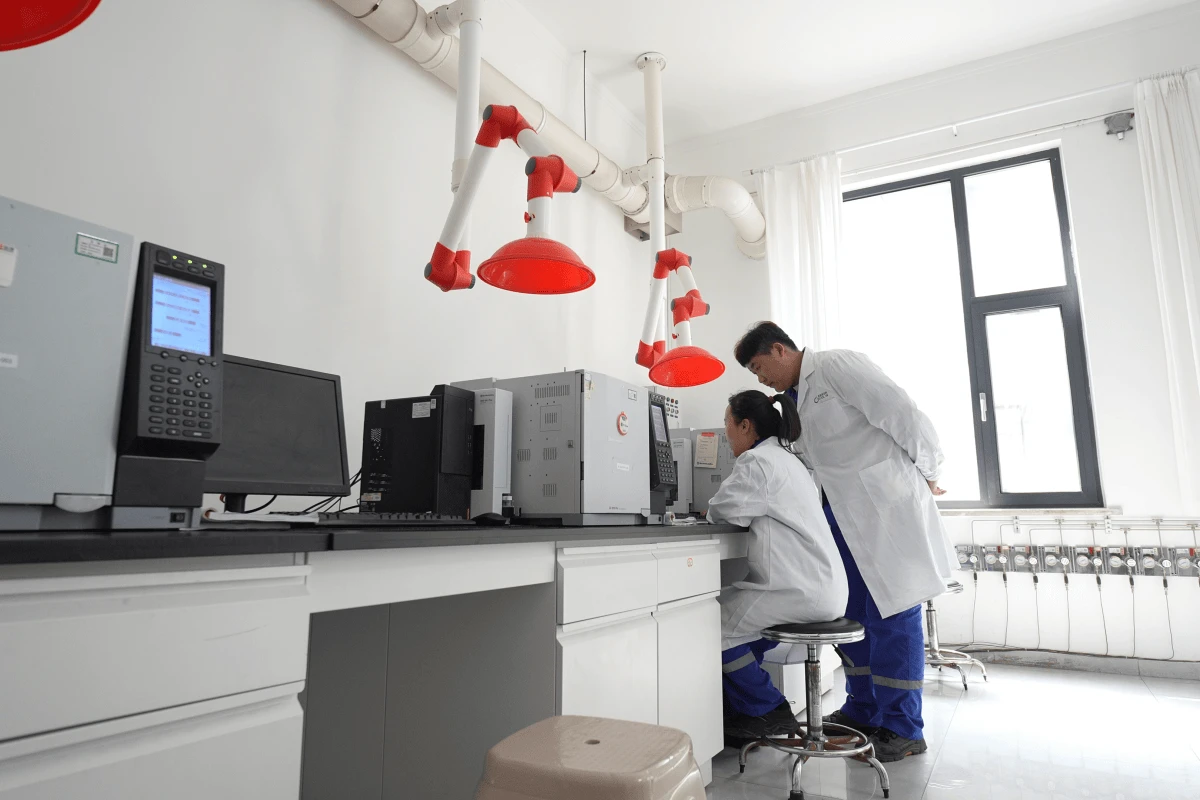
- Complete Quality Documentation - Every shipment includes a Certificate of Analysis (COA) and Safety Data Sheet (SDS), meeting overseas customer supplier audit requirements and drinking water treatment chemical registrations. Our technical team provides jar testing guidance and dosing optimization support.
Key Applications
Drinking Water Purification
Used for surface water, reservoir water, and municipal supply purification to remove turbidity, suspended solids, colloids, and natural organic matter. Low heavy metal levels meet drinking water treatment chemical requirements, producing finished water with low turbidity and good taste, ensuring municipal water supply safety.
Municipal Sewage Treatment
Used for primary clarification and secondary effluent polishing in municipal wastewater treatment plants, removing suspended solids, colloids, partial COD, and color. Can be combined with PAM to enhance sludge dewatering performance.
Industrial Wastewater Treatment
Widely used in papermaking effluent, textile dyeing wastewater, mining wastewater, and chemical industry effluent. Removes colloids, color, and partial COD through charge neutralization and bridging, serving as a standard treatment chemical for both pretreatment and advanced treatment stages.
Oilfield Produced Water & Sludge Dewatering
Used for oil-water separation and suspended solids removal in oilfield produced water and refinery effluent, as well as conditioning before sludge thickening and dewatering. Combined with PAM, it significantly improves sludge settling and dewatering efficiency.
FAQ
Q: Does this product meet drinking water treatment chemical standards?
A: Yes. Our general-purpose liquid PAC is produced with strictly controlled heavy metal limits - arsenic ≤0.0005%, lead ≤0.002%, cadmium ≤0.0005%, mercury ≤0.00005%, chromium ≤0.005%. Every batch includes a full COA with heavy metal test results, meeting drinking water treatment chemical requirements.
Q: Can you supply by bulk tank truck for municipal water plants?
A: Yes. For domestic municipal water plants and large industrial customers, we supply by bulk tank truck (full truckload). Our 25,000-ton annual production capacity supports long-term supply contracts with scheduled deliveries. For export, 200L PE drums and 1000L IBC totes are available.
Q: What technical support do you provide for water plant dosing?
A: We provide jar testing guidance, optimal dosage determination, pH range verification, and compatibility advice with other treatment chemicals (PAM, activated carbon, etc.). Our technical team helps you calibrate dosing pump settings based on your raw water quality and treatment targets.
Q: What is the difference between this general grade and wastewater-grade PAC?
A: This general-purpose grade places extra emphasis on heavy metal control and insoluble matter, making it suitable for drinking water purification in addition to municipal sewage and industrial wastewater. The wastewater grade is optimized for high-turbidity, high-color industrial effluent where flocculation speed and cost efficiency are the primary priorities.
Q: How should liquid PAC be dosed in a drinking water plant?
A: Dilute the concentrate 5–10 times with clean water before dosing. Typical dosage for surface water and reservoir water is 5–20 mg/L. Optimal dosage must be determined by jar testing based on raw water turbidity, temperature, and organic load. Fast mixing for 30–60 seconds, followed by flocculation and sedimentation.
Q: What is the storage condition and shelf life?
A: Store in a covered, ventilated warehouse above 0°C - liquid PAC may crystallize or freeze below 0°C, which reduces performance. Protect from direct sunlight and avoid contact with strong acids and alkalis. Shelf life is 6 months from manufacture in sealed original packaging.
Why Choose Guolan New Materials?
- Drinking-Water-Safe Heavy Metal Control - Arsenic, lead, cadmium, mercury, and chromium are tightly controlled to levels suitable for potable water treatment. Every batch ships with a full COA including heavy metal test results, helping water utilities meet regulatory compliance and customer audit requirements.
- Ready-to-Dose Liquid Formulation - Eliminates on-site dissolving tanks, mixers, and aging basins. Liquid PAC dilutes directly into automatic dosing systems, reducing labor, dust, and concentration fluctuations from incomplete solid dissolution. Ideal for continuous 24/7 operation at municipal water plants.
- Triple Flocculation, Wide pH Range - Charge neutralization, bridging adsorption, and sweep flocculation work together for fast, dense floc formation. Effective pH range 5.0–9.0 adapts to seasonal raw water quality changes, reducing the need for pre-acid or pre-alkali adjustment.
- One Product Across Multiple Water Types - Suitable for drinking water purification, municipal sewage, and general industrial wastewater. Water treatment companies and EPC contractors can simplify procurement and inventory by stocking one versatile grade for multiple project types.
- Reliable Supply for Municipal Projects - 25,000-ton annual capacity supports bulk tank truck delivery for domestic municipal water plants and FCL/LCL export for international projects. Long-term supply contracts and scheduled delivery schedules available for recurring water treatment operations.
Hot Tags: polyaluminium chloride cas 1327-41-9, China polyaluminium chloride cas 1327-41-9 manufacturers, suppliers, factory


